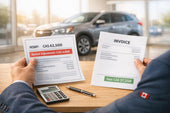
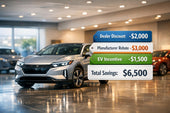
Invoice pricing reports give you a clear picture of a vehicle's actual cost to the dealer, which is often much lower than the MSRP (sticker price). This information helps you negotiate better deals by exposing hidden factory-to-dealer incentives, rebates, and other discounts that dealers don’t openly share. For example, dealer costs can be reduced by as much as $2,000 due to these incentives, and Canadian buyers save an average of $1,200 using this data.
Key Takeaways:
- Invoice Price vs. MSRP: The invoice price is what the dealer pays the manufacturer, while the MSRP includes dealer profit margins. Knowing both helps you negotiate effectively.
- Hidden Discounts: Factory-to-dealer incentives, rebates, and holdbacks can lower the dealer’s actual cost significantly.
- Vehicle Details Matter: Ensure the report matches the exact make, model, trim, and options of your chosen vehicle.
- Current Data: Use up-to-date reports to avoid missing out on recent incentives or rebates.
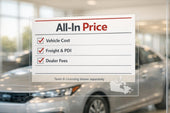
- Fees Breakdown: Understand all mandatory fees (e.g., freight, PDI) and watch for unnecessary dealer-added charges.
By using invoice pricing reports, you gain a strong negotiation tool, ensuring you’re paying a fair price without overpaying. Always verify details, check for hidden incentives, and confirm all costs before finalizing a deal.
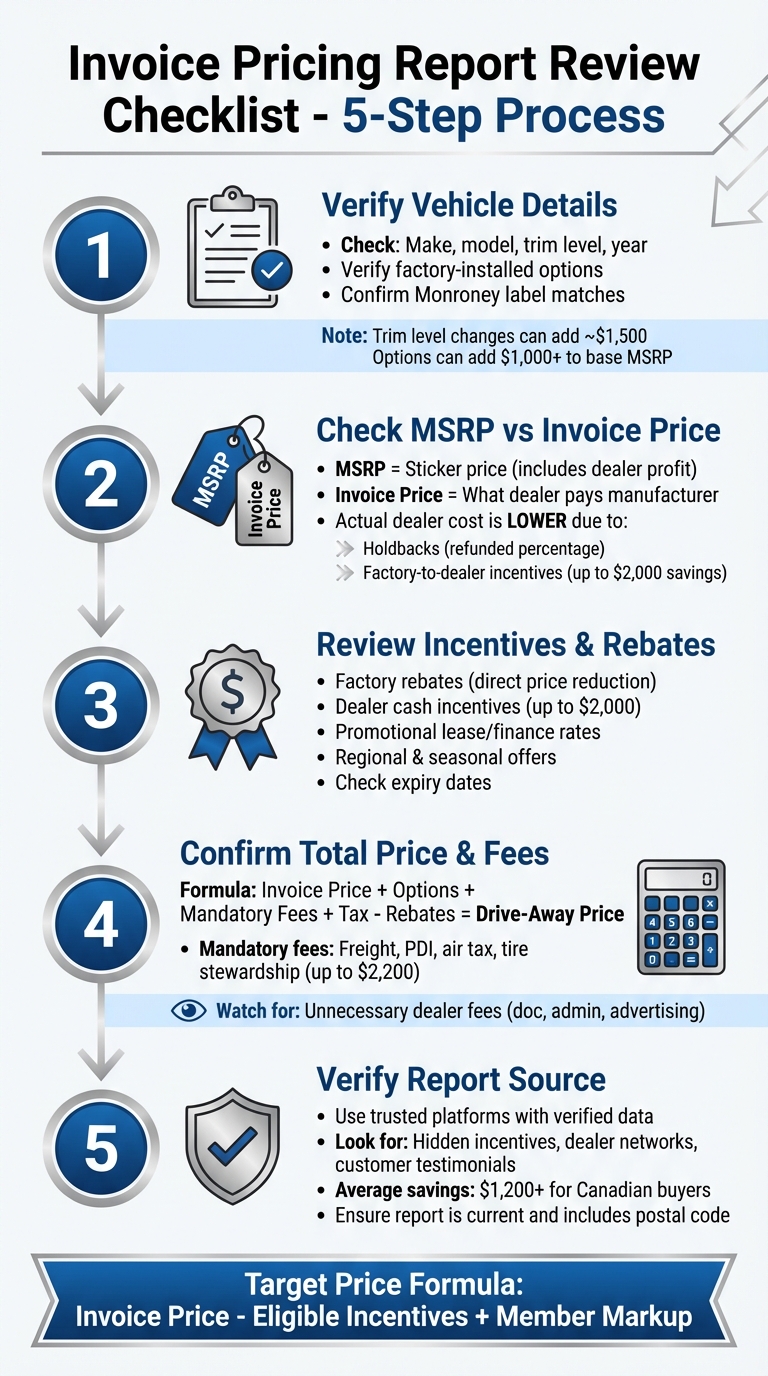
5-Step Guide to Reviewing Invoice Pricing Reports for Car Purchases
How to Use DEALER INVOICE Pricing to Negotiate The Best Deal
Verify Vehicle and Report Details
Double-check that every detail on your invoice pricing report aligns with the vehicle you're planning to buy. Even small errors can lead to significant costs, so these verifications are key to negotiating effectively.
Confirm Vehicle Specifications
Ensure the make, model, trim level, and year on the report are an exact match with the vehicle you're discussing. For example, moving up a trim level can add around $1,500, while manufacturer-installed options could tack on at least $1,000 to the base MSRP. A report for a Honda CR-V LX won't help you negotiate for an EX-L trim since the invoice prices differ significantly.
Pay close attention to factory-installed options like paint colour, seat materials, and safety or tech packages. These need to match the vehicle you're considering. To confirm these details, request the Monroney label - a document that lists the vehicle's features and specifications.
"You want to know what options and features the vehicle has, and what better way than to look at the Monroney label?" - Ray Shefska from CarEdge
Don’t overlook regulatory fees like freight, air tax, and PDI, which can add up to $2,200. Your report should clearly outline the base MSRP, freight charges, and the total cost of all selected options in a detailed pricing summary.
Check Report Date and Contact Information
Make sure the report is up-to-date. Factory incentives, rebates, and financing offers change frequently, often depending on your postal code. Using an outdated report could mean missing out on current deals. Look for a timestamp on the report to ensure it reflects the latest market conditions.
Additionally, the report should provide a specific dealer contact. Some platforms also include a primary contact from their support team to assist you in navigating the deal. Having accurate contact information ensures smoother negotiations and helps verify the pricing details.
Check MSRP and Invoice Price Details
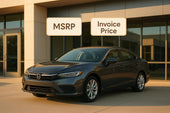
Understanding both the MSRP and invoice price gives you a clearer picture of a vehicle's pricing. The MSRP (Manufacturer's Suggested Retail Price), often referred to as the "sticker price", is what automakers recommend dealers charge. This price includes production costs, marketing expenses, and profit margins. On the other hand, the invoice price represents what the dealer pays the manufacturer for the vehicle. The gap between these two prices highlights the dealer's built-in profit margin and can shape how you approach negotiations.
It’s also important to note that the dealer's actual cost is usually lower than the invoice price. This is because of a "holdback" - a small percentage of the invoice price that manufacturers refund to dealers to help cover their operational expenses. Additionally, manufacturer-to-dealer incentives can further reduce the dealer’s effective cost, sometimes by thousands of dollars below the invoice price. Knowing these details can give you an edge when negotiating.
Compare Base Price and Options
Just as accurate vehicle details are essential, having a clear breakdown of the MSRP and invoice price strengthens your pricing strategy. It’s crucial to distinguish the base price from the cost of added options. The base MSRP reflects the price of the entry-level trim with standard features, while the final MSRP includes the base price plus the cost of any factory-installed options. These options - such as an all-wheel-drive system (AWD), advanced tech packages, or upgraded paint - impact both the MSRP and the invoice price.
A detailed pricing breakdown should outline each component, showing its specific MSRP and invoice price. This transparency not only clarifies the costs but also reinforces confidence in your negotiation process. To ensure accuracy, the report should include the vehicle's year, make, model, and trim level.
Review Available Incentives and Rebates
Once you’ve confirmed the base price and options for your vehicle, it’s time to dive into the available incentives and rebates. Most invoice pricing reports include a section labelled "Current Factory Incentive Programs", which outlines the rebates and incentives currently on offer. This section not only provides the value of each incentive but also includes their expiry dates, helping you plan your purchase at the right time. Common discounts include factory rebates, dealer cash incentives (unadvertised discounts offered by manufacturers to dealers), and promotional lease or financing rates. Be sure to check the eligibility criteria for these offers to see which ones you qualify for.
Keep in mind that many incentives come with specific requirements. For instance, programs like Grad Awards, First-Time Owner, Mobility, or Owner Loyalty may offer rate reductions instead of direct cash discounts. Since eligibility often needs to be confirmed, it’s a good idea to discuss these details with your dealer before finalizing your purchase.
Dealer cash incentives can be particularly valuable, sometimes reaching up to $2,000 depending on the vehicle model and your region. However, these discounts are often unadvertised, so you’ll need to rely on your invoice pricing report to uncover them and negotiate them into your final deal.
Identify Discount Types
Once you’ve identified the available incentives, break them down to maximize your savings. Factory rebates directly lower the vehicle’s purchase price, while dealer cash incentives reduce the dealer’s cost. You might also find promotional lease or finance rates offered through the manufacturer’s financing division. Additionally, keep an eye out for regional and seasonal offers, like clearout events that could include pre-tax cash rebates or extras such as winter tires, which are often tied to specific provinces or timeframes.
Always verify the expiry dates listed in the "Current Factory Incentive Programs" section to ensure the offers are still valid when you’re ready to buy. Many reports also feature a "Recommended Dealer" section, where vetted dealerships are highlighted to help you take full advantage of all available rebates and incentives. Use the contact information provided to reach out to specialists or recommended dealers and confirm which regional or seasonal promotions apply to your situation.
sbb-itb-20f5d75
Confirm Total Price and Fees
Once you've reviewed any incentives and rebates, it's time to confirm the full breakdown of costs. A dealer invoice report will show the "dealer cost" - the price the dealer pays the manufacturer before adding markups. But keep in mind, the final "drive-away" price includes more than just this base cost. It factors in optional features, mandatory fees, taxes, and rebates. Your pricing report should clearly outline how these elements - invoice price, options, fees, taxes, and rebates - combine to calculate your total cost.
Start with the base invoice price, then add the costs of any selected options or add-ons. Next, include mandatory fees and provincial sales tax (like Ontario's 13% HST). Finally, subtract any rebates that apply after taxes. Many reports also provide "Pricing Guidance" to help assess whether you're getting a fair deal by accounting for the invoice price and available incentives. Carefully review each step to ensure no costs are overlooked.
Check Drive-Away Price Breakdown
Your invoice pricing report should detail every step from the base price to the final drive-away amount. Begin by confirming that the base invoice price aligns with your vehicle's specific configuration (e.g., FWD or AWD). Then, check that every selected option or package is listed with its individual cost.
The subtotal before taxes should reflect the invoice price plus any optional features, minus pre-tax incentives like factory rebates or dealer cash discounts. Provincial sales tax is then applied to this subtotal. After that, any rebates that apply post-tax - such as loyalty program discounts - are deducted, giving you the Cash Purchase Price. Double-check to ensure no additional dealer fees have inflated the final price.
Look for Additional Fees
Invoice pricing reports often include a section for "Mandatory Fees". These typically cover charges like freight (or destination fees), PDI (Pre-Delivery Inspection), air tax, and tire stewardship fees. Freight fees cover the cost of transporting the vehicle from the factory to the dealership, while PDI is charged for preparing the car for the road.
"The fees include: freight, PDI, air tax, tire stewardship and so on." - Unhaggle
Be cautious about extra fees that seem unnecessary or aren't well explained, such as documentation, administrative, or advertising charges. These are often added by individual dealers or regional groups, rather than being part of the manufacturer's pricing structure. Compare the dealer's initial quote with your invoice report to spot any unjustified or inflated fees. Keep in mind that standard invoice prices generally do not include costs like tax, title, licence, or registration fees, which will appear as separate line items.
Confirm Report Source Credibility
Once you’ve got your vehicle details and pricing breakdown sorted, it’s time to ensure the source of your report is reliable. A trustworthy invoice pricing report will compare the dealer invoice price with the retail MSRP, giving you a clear picture of what you’re up against. Look for platforms that provide "insider" data - things like hidden factory-to-dealer incentives, regional rebates, and dealer holdbacks that aren’t typically disclosed. Without these details, you’re at a disadvantage when negotiating.
Reliable reports should also include specific vehicle details, such as manufacturer and vehicle codes, to ensure the information aligns perfectly with your vehicle’s trim and model. Platforms that feature networks of "Recommended Dealers" or "Certified Dealerships" add an extra layer of credibility by validating their pricing data. Additionally, check for third-party validation, like verified customer testimonials that reference specific locations and vehicles. This kind of transparency builds trust.
Use Trusted Pricing Platforms
Once you’ve confirmed the report’s accuracy, the next step is choosing a reliable pricing platform. For instance, Price Driven offers verified invoice pricing, dealer-level discount information, and pre-negotiated prices with partner dealerships. On average, users save over $1,200 with Price Driven, which provides free access to verified dealer invoice pricing and hidden incentives. The platform boasts a 5.0-star rating on Google, with users like Lucas H. from London, ON, sharing how he saved hundreds on a 2025 Kia Seltos.
"Price Driven is your go-to for buying a new car with confidence. We empower you with free access to real dealer invoice pricing, including hidden incentives. This transparency helps you avoid overpaying." - Price Driven
The best platforms also offer real-time lease and financing rates from major lenders. They include tools to guide your pricing decisions and maintain extensive databases covering vehicles sold in Canada from 2011 to 2026. To ensure the data is up-to-date, check for factory incentive expiry dates and verify the platform’s partnerships.
Conclusion
Before you head to the dealership, take a moment to double-check every detail in your invoice pricing report. Ensure the vehicle specifications align with the model you’ve chosen. Don’t overlook hidden incentives - they could save you as much as $2,000. Make sure your report reflects your postal code, itemizes all fees (like destination charges, freight, advertising fees, and federal taxes such as the AC excise tax), and includes the latest lease and finance rates . These details are the backbone of your negotiation strategy.
By carefully reviewing everything - from the vehicle specs to the fee breakdown - you’ll be ready to negotiate with confidence. Use this simple formula: Invoice Price – Eligible Incentives + Member Markup to calculate your target price before setting foot in the showroom. Bring a printed copy of your report to back up your discussions. And remember, if a dealer refuses to honour verified pricing, you can walk away knowing you’ve done your homework.
"The invoice price is almost always higher than the amount the dealer actually ends up paying to the manufacturer." - Edmunds
FAQs
How can I use an invoice pricing report to negotiate a better deal on a new car in Canada?
An invoice pricing report shows the dealer's cost for a vehicle - essentially, what they pay the manufacturer before adding any mark-ups or extra fees. This cost is generally 5%–15% lower than the MSRP, offering a clear picture of the dealer’s potential profit margin and any hidden rebates or factory incentives. Having this knowledge puts you in a stronger position to negotiate, focusing on the dealer's cost rather than the higher sticker price.
To get the most value from the report, compare the invoice price with the MSRP and identify any extra fees, such as freight or PDI. Separate mandatory charges from optional ones to avoid unnecessary costs. Begin negotiations closer to the invoice price and ask for an itemized breakdown of all expenses. Be sure to point out any rebates or discounts and confirm they’re applied to your deal. Most importantly, concentrate on the final out-the-door price, which includes taxes and fees, so there are no surprises later. Using this strategy can help you save hundreds - or even thousands - on your new car.
What hidden discounts can reduce a dealer's actual cost?
Dealerships often enjoy hidden discounts that reduce their actual expenses. These can come in the form of manufacturer incentives or cash rebates, credits for factory-installed options, and dealer holdbacks - usually around 2–2.5% of the invoice price.
By understanding these behind-the-scenes discounts, you can assess invoice pricing reports with greater accuracy. Being aware of these factors ensures you're better equipped to make informed decisions when negotiating your next car purchase.
Why should I check the date and vehicle details on an invoice pricing report?
Verifying the report’s date is crucial to ensure the pricing aligns with the most recent market incentives and costs, which can shift often. This step helps you avoid basing negotiations on outdated figures.
It’s also important to cross-check the vehicle details - including the make, model, trim, and any added options. This ensures the report accurately represents the specific car you're evaluating, reducing the risk of errors or mismatched information that could complicate pricing or create confusion during the final stages of your purchase.