In Canada, all-in pricing laws ensure that the price you see when shopping for a car reflects the total cost, with only sales tax and licensing fees excluded. These laws aim to protect buyers from hidden fees and unexpected charges during the final stages of a purchase. Introduced in Ontario in 2010, similar rules now apply in other provinces, although enforcement remains a challenge.
Key Points:
- What’s Included: Advertised prices must include fees like freight, pre-delivery inspection (PDI), administrative charges, government levies, and pre-installed products (e.g., nitrogen-filled tires).
- What’s Excluded: Only sales tax (GST/HST), licensing fees, and financing options (if applicable) can be added later.
- Federal Oversight: The Competition Bureau enforces national standards to prevent misleading pricing by manufacturers and dealers.
- Penalties: Dealers violating these rules face fines, licence suspensions, or other sanctions depending on the province.
If a dealer doesn’t follow these laws, walk away and report them to your provincial regulator. Tools like Price Driven can help verify prices and ensure compliance with these regulations, saving you time and money.
All-In Pricing is the Law
sbb-itb-20f5d75
What is All-In Pricing?
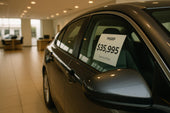
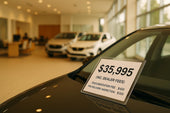
All-in pricing is a legal requirement in several Canadian provinces, ensuring that a vehicle's advertised price includes all dealer charges - except for sales tax, licensing fees, and financing costs, if applicable. This rule applies to all forms of advertising, whether it's on dealer websites, social media, print ads, radio, television, billboards, or even signs displayed on the vehicle itself. According to the Alberta Motor Vehicle Industry Council and OMVIC, the advertised price must account for all fees, with the only exceptions being GST/HST, licensing costs, and financing charges if applicable. This pricing approach was designed to eliminate hidden fees, a topic explored further in the next section.
Why All-In Pricing Exists
All-in pricing was introduced to protect buyers from unexpected costs during the final stages of a sale. Before this became law in Ontario in 2010, dealers could advertise vehicles at a lower price and then tack on additional fees like documentation charges, nitrogen tire costs, or security etching during the final paperwork. This often led to "sticker shock" for buyers.
By requiring all fees to be included upfront, all-in pricing makes it easier for shoppers to compare prices between dealerships without worrying about hidden charges. However, a consumer awareness campaign revealed that only 29% of Ontarians were aware that dealers are legally obligated to include all fees in the advertised price.
"There should be no additional hidden fees or added surprise costs, with the exception of HST and licensing." - Terry O'Keefe, Director of Communications and Education at OMVIC
What's Included in All-In Pricing
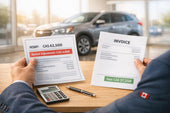
The advertised price must cover charges like freight and pre-delivery inspection (PDI), which include transportation costs and the vehicle's initial inspection, as well as administrative or documentation fees. Even if dealers claim these fees are "mandatory by law", they must already be factored into the total advertised price.
Government levies, such as air taxes, tire levies, Ontario's green levy, and the federal luxury tax (introduced on September 1, 2022, for vehicles priced over $100,000), must also be included in the advertised price. Additionally, any pre-installed products or services - like nitrogen-filled tires, security etching, warranties, theft deterrents, or fuel - must be part of the total cost.
The only costs that can be added beyond the advertised price are sales tax (GST in Alberta, HST in Ontario), provincial licensing fees for registration and plates, and financing charges if applicable. To ensure transparency, all fees included in the advertised price must also be itemized separately on the final bill of sale.
Federal Rules on Pricing Transparency
National Pricing Standards
In Canada, provincial regulators oversee dealer behaviour, but the Competition Bureau is responsible for enforcing national standards that apply to all businesses, including car manufacturers and dealerships. This independent law enforcement agency enforces the Competition Act, which aims to prevent misleading marketing practices and ensure fair competition across the country.
One of the Bureau's primary responsibilities is regulating "regular price claims." These are the list or regular prices that manufacturers and dealers use to highlight discounts. For a business to advertise a regular price alongside a sale price, the higher price must meet specific criteria. It must satisfy either the Volume Test (where over 50% of sales occurred at or above the regular price within a 12-month period) or the Time Test (where the product was offered at the regular price for more than half of a six-month period). These rules are designed to prevent businesses from inflating regular prices to exaggerate discounts.
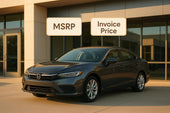
The Bureau also oversees price maintenance under Section 76 of the Competition Act. This section covers how manufacturers influence dealer pricing through strategies like Manufacturer's Suggested Retail Price (MSRP) and invoice pricing and Minimum Advertised Pricing (MAP). While manufacturers can suggest an MSRP, any advertisement must clearly state that dealers are free to sell for less. If manufacturers attempt to pressure dealers into maintaining higher prices, this could trigger an investigation.
These regulations establish a baseline of fairness and transparency in pricing, which is expanded upon with additional federal safeguards.
How Federal Rules Protect Buyers
Federal pricing regulations work hand-in-hand with provincial laws to provide a comprehensive safety net for Canadian car buyers. While provincial bodies like OMVIC in Ontario or AMVIC in Alberta focus on dealer-specific advertising, the Competition Bureau targets manufacturer-level advertising to ensure claims about savings are accurate and verifiable. Together, these rules aim to eliminate misleading pricing practices and protect consumers.
Penalties for violating federal pricing rules are steep. For first-time offences, individuals can face fines of up to $750,000, while corporations may be fined as much as $10,000,000. In cases where a vehicle is sold above its advertised price - violating Section 74.05 of the Competition Act - corporations could face penalties of either $10,000,000 or three times the value of the benefit gained from the deceptive practice, whichever is greater. If you encounter a situation where a dealer lists a higher price than advertised, you can file a complaint with the Competition Bureau.
All-In Pricing Laws by Province
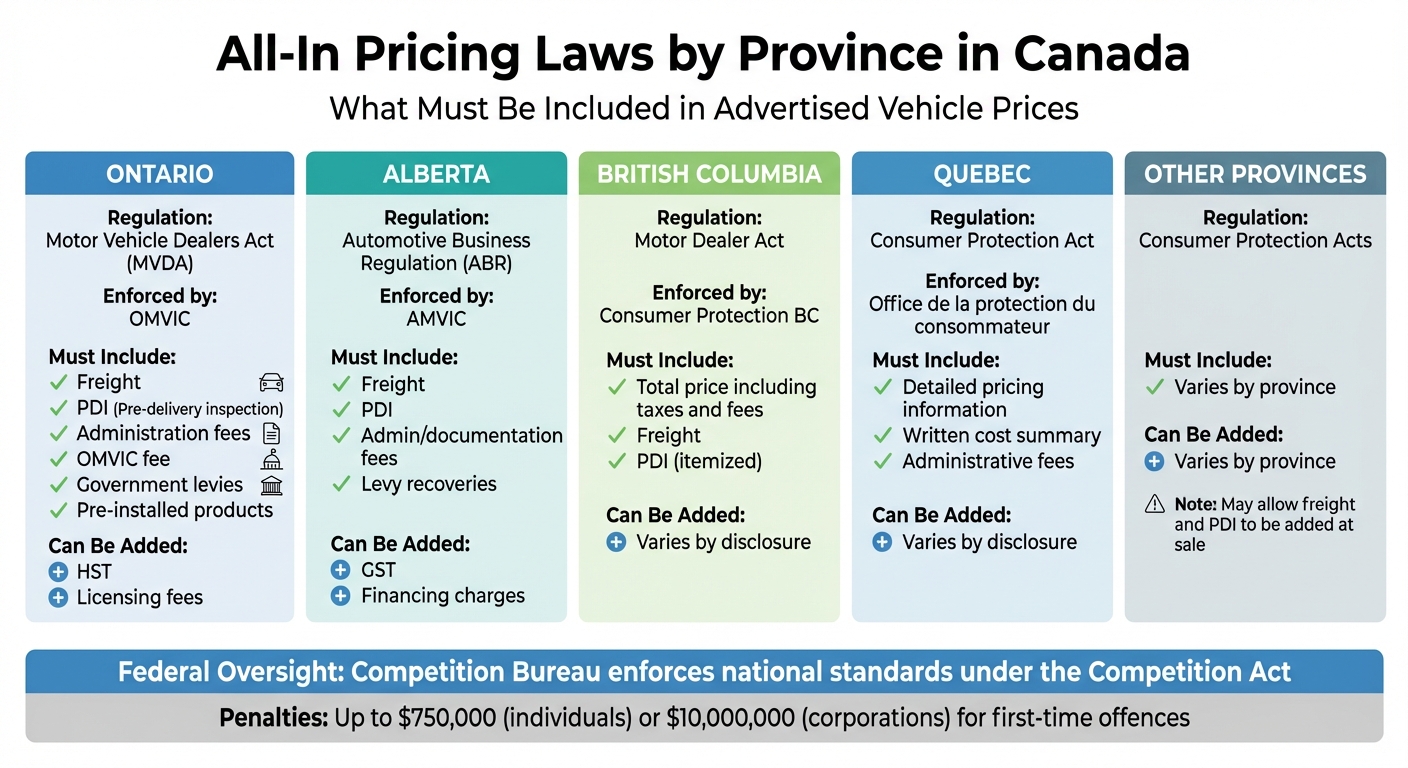
All-In Pricing Laws by Province in Canada: What's Included and Excluded
Each province in Canada enforces its own rules about all-in pricing for vehicles, building on federal standards for transparency. These laws specify which fees must be included in advertised prices and which can be added later. Understanding these rules can help you avoid hidden fees and spot dealers who aren't playing by the rules.
Ontario
Ontario introduced all-in pricing in 2010 through the Motor Vehicle Dealers Act (MVDA). This law requires that any advertised vehicle price includes all fees the dealer plans to charge, except for Harmonized Sales Tax (HST) and licensing fees (which cover the cost of registration and plates).
"The price advertised for a motor vehicle must include all fees and charges the dealer intends to collect, with the exception of HST and licensing." – OMVIC
This means that fees like freight, pre-delivery inspection (PDI), administration charges, government levies, and pre-installed products (e.g., nitrogen tire fills or security etching) must be baked into the advertised price. Even market adjustment fees above the MSRP must be disclosed in the ad if the dealer plans to charge them. OMVIC, Ontario's vehicle sales regulator, enforces these rules, and violations are common under the MVDA.
These rules apply to all forms of advertising, from social media posts to price tags on vehicles, radio ads, TV commercials, and online listings. However, OMVIC does not oversee manufacturer websites or build-and-price tools. Dealers are also prohibited from inflating licensing fees beyond the actual cost of registration.
British Columbia
British Columbia has its own strict pricing rules under the Motor Dealer Act. Dealers must clearly advertise the full price of a vehicle, which includes all taxes and fees. This transparency allows buyers to easily compare offers across dealerships. Charges like freight and PDI must be itemized in the total price shown in advertisements.
Quebec
Quebec addresses pricing transparency through its Consumer Protection Act. Dealers are required to provide detailed pricing information and a written summary of all costs before completing a sale. This ensures buyers know exactly what they're paying for. Administrative fees must also be disclosed and included in the total advertised price, reducing the risk of surprise charges.
Other Provinces and Territories
Alberta has clear rules under the Automotive Business Regulation. Advertised prices must include fees such as freight, PDI, administrative charges, documentation fees, and levy recoveries. Only GST and financing-related charges can be excluded.
"All-in advertised pricing is the law. That means the advertised price of a vehicle must include ALL fees and charges such as, but not limited to, freight, pre-delivery inspections or expenses, administration costs, documentation fee(s) and levy recoveries." – Alberta Motor Vehicle Industry Council
The Alberta Motor Vehicle Industry Council (AMVIC) enforces these rules, and buyers are encouraged to report dealers who try to add fees not included in the ad.
In provinces like Manitoba, Saskatchewan, and those in the Atlantic region, Consumer Protection Acts ensure pricing clarity. However, not all of these areas have specific all-in pricing laws. Dealers in these regions may legally advertise a base price and add charges like freight and PDI at the time of sale, potentially leading to unexpected costs. These provincial variations work alongside federal laws to promote pricing transparency across Canada.
| Province/Territory | Primary Regulation | Key Mandatory Inclusions | Key Exclusions |
|---|---|---|---|
| Ontario | Motor Vehicle Dealers Act (MVDA) | Freight, PDI, administration fees, OMVIC fee, government levies, pre-installed products | HST, Licensing |
| Alberta | Automotive Business Regulation (ABR) | Freight, PDI, admin/documentation fees, levy recoveries | GST, Financing charges |
| British Columbia | Motor Dealer Act | Total price including taxes and fees | Varies by disclosure |
| Quebec | Consumer Protection Act | Detailed pricing information and written cost summary | Varies by disclosure |
| Other Provinces | Consumer Protection Acts | Varies by province | Varies by province |
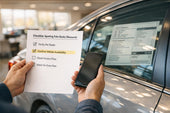
Federal laws, like the Competition Act, also prohibit deceptive advertising practices. To protect yourself, take screenshots or photos of advertisements, focus on the total cost rather than monthly payments, and confirm all fees with the dealer before signing any contracts.
Penalties for Breaking the Rules
Dealers who violate all-in pricing laws face hefty fines and even licence suspensions. These measures underline Canada’s dedication to keeping advertised prices honest and final. Provincial regulators, including those in Ontario, Alberta, and Manitoba, hold the authority to investigate complaints, issue fines, and take legal action to ensure dealers comply with the law.
Fines and Penalties by Province
Penalties for breaking all-in pricing laws differ across provinces. In Ontario, failing to adhere to all-in price advertising rules is one of the most frequent offences under the Motor Vehicle Dealers Act (MVDA), as noted in 2023. Offenders can face fines, licence suspensions, or other sanctions imposed by OMVIC.
"Dealerships that fail to comply with the MVDA rules on all-in price advertising may face consequences such as fines, license suspension, or other penalties imposed by OMVIC." – Automobile Protection Association
Manitoba takes a transparent approach by publicly listing compliance orders issued against dealerships. This allows consumers to see which businesses have breached the rules.
"The new rules allow the Consumer Protection Office to publicise compliance orders that have been issued and they also allow for the release of information to the public, when it is in the public interest to do so." – Manitoba Consumer Protection Office
Here’s a quick look at how penalties are enforced across provinces:
| Province | Regulatory Body | Potential Penalties |
|---|---|---|
| Ontario | OMVIC | Fines, licence suspension, and other penalties under the MVDA |
| Alberta | AMVIC | Prosecution for offences under the Automotive Business Regulation and codes of conduct |
| Manitoba | Consumer Protection Office | Administrative penalties, compliance orders, mediation, prosecution, and public disclosure of orders |
| British Columbia | Consumer Protection BC | Enforcement of total price disclosure and clear advertisement practices |
| Quebec | Office de la protection du consommateur | Enforcement of detailed pricing requirements under the Consumer Protection Act |
Knowing these penalties can help you act quickly when a dealer fails to follow the law.
What Buyers Can Do About Non-Compliance
Strict penalties mean buyers have clear options when dealers break the rules. If you notice non-disclosed fees during a transaction, walk away immediately. You’re under no obligation to proceed with a purchase if the dealer isn’t playing by the rules. Capture evidence, such as photos or screenshots, and report the issue to your provincial regulator.
For example, in Ontario, you can contact OMVIC's Complaints & Inquiries Department. In Alberta, file a complaint through an AMVIC online account. In Manitoba, the Consumer Protection Office may step in with mediation or issue a compliance order. Keeping thorough records of your communications and documents will strengthen your case.
"Walk away, shop elsewhere and report the dealer to OMVIC's Complaints & Inquiries Department." – OMVIC
Before committing to a purchase, confirm that the dealer is registered with your provincial regulator and understand how dealer pricing works, as these pricing laws only apply to registered dealers. Always double-check the final bill of sale to ensure all fees align with the advertised price. Taking these steps reinforces the transparency expected across provinces.
How Price Driven Helps with Transparent Pricing
Price Driven offers a straightforward approach to maintaining transparent pricing by clearly outlining penalties and buyer actions. With the right tools, staying compliant with all-in pricing regulations becomes much easier. Price Driven provides transparent invoice pricing and pre-negotiated deals on new cars in Canada, ensuring buyers can verify that advertised prices meet provincial requirements. The platform even reveals the actual price dealerships pay manufacturers, giving buyers a solid baseline to spot any unauthorized fees that might creep into the final price.
Price Driven Features
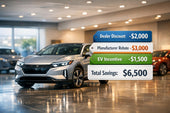
One standout feature is the free discount reports, which showcase manufacturer incentives and market-driven discounts. These reports help buyers calculate the true total cost before taxes and licensing. Plus, the platform's pre-negotiated pricing ensures that the final price complies with provincial transparency laws, eliminating surprise "mandatory" fees at the dealership. On average, customers using Price Driven save over $1,200 on their vehicle purchases.
"Knowing the invoice price can serve as a solid foundation in your discussions with the dealer." – Price Driven
The service also addresses common dealership tactics like forced financing and hidden markups. Instead of focusing on monthly payments, Price Driven encourages buyers to zero in on the total cost of the vehicle. This approach reinforces the principles of all-in pricing laws, giving buyers the insights they need to avoid unnecessary charges.
Verifying All-In Prices with Price Driven
Price Driven's tools make it easy to compare dealer advertisements with market standards and invoice data. This ensures that all mandatory fees - such as freight, PDI, and admin fees - are included in the advertised price. By researching the invoice price through Price Driven before visiting a dealership, buyers can approach negotiations with confidence and a stronger position.
If a dealership tries to tack on fees that go beyond what provincial laws allow, you can walk away and report them to your provincial regulator. This integration of transparent data not only boosts buyer confidence but also ensures accountability in the all-in pricing system. Price Driven equips buyers to hold dealerships to account and secure fair, compliant deals.
Conclusion
All-in pricing regulations across Canada are designed to protect consumers by ensuring that advertised prices include all mandatory fees, eliminating surprises at checkout. Whether you're shopping in Ontario, British Columbia, Quebec, or elsewhere, these rules ensure the price displayed is what you'll pay - apart from HST/GST and licensing fees.
"The price you see is the price you pay - no hidden fees or unexpected charges." – Automobile Protection Association
To help you navigate these regulations, tools like Price Driven offer resources such as invoice pricing and free discount reports, making it easier to verify advertised prices and negotiate effectively. Shifting your focus to the total cost of ownership, rather than just monthly payments, aligns with the principle that the advertised price should represent the final cost of your vehicle.
If a dealer attempts to charge fees beyond the all-in advertised price, don’t hesitate to walk away and report the violation to authorities like OMVIC or AMVIC. Armed with transparent data and a clear understanding of your rights, you can confidently approach the car-buying process and secure a fair deal.
"A well-informed buyer is a powerful buyer. Arm yourself with information, don't hesitate to ask questions, and make the most of your negotiating skills." – Price Driven
FAQs
Does all-in pricing apply to private sales?
All-in pricing laws in Canada usually apply to vehicle sales conducted through dealerships, whether the vehicles are new or used. These regulations, however, typically do not cover private sales. Their primary aim is to oversee advertising and sales practices within dealerships.
What proof should I save if a dealer adds extra fees?
Save any documentation or detailed records that outline the extra fees, like a bill of sale that lists all charges. Having these records can help verify if the fees align with all-in pricing laws and provide clarity about the transaction.
Can a dealer change the price after I place a deposit?
If the price is advertised as an all-in price, the dealer is not allowed to change it after you’ve placed a deposit. In provinces like Ontario and Alberta, laws require advertised prices to include all fees and charges. This means the final price is legally binding under these all-in pricing regulations.